
High-Temperature
Insert Molding Services
Combine high-temperature plastics with precision metal inserts for components that need heat resistance, electrical insulation, and secure mechanical connections.
- High-temperature resin selection
- Threaded inserts, terminals & custom metal parts
- In-house mold making & DFM support
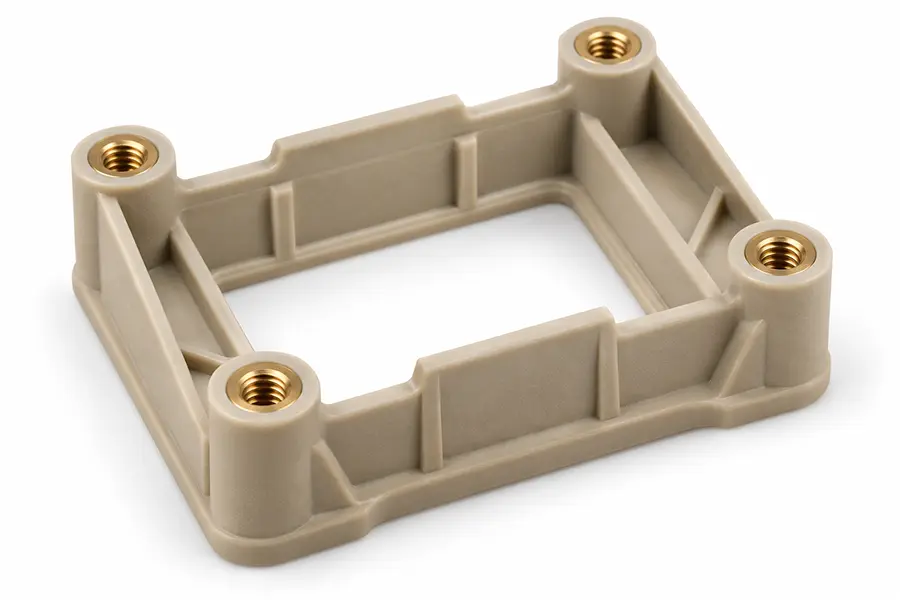
Insert Molding for High-Temperature Components
Combine high-temperature plastics with threaded inserts, electrical terminals, bushings, and custom metal components. Each design is reviewed around its operating environment, connection method, and assembly requirements.
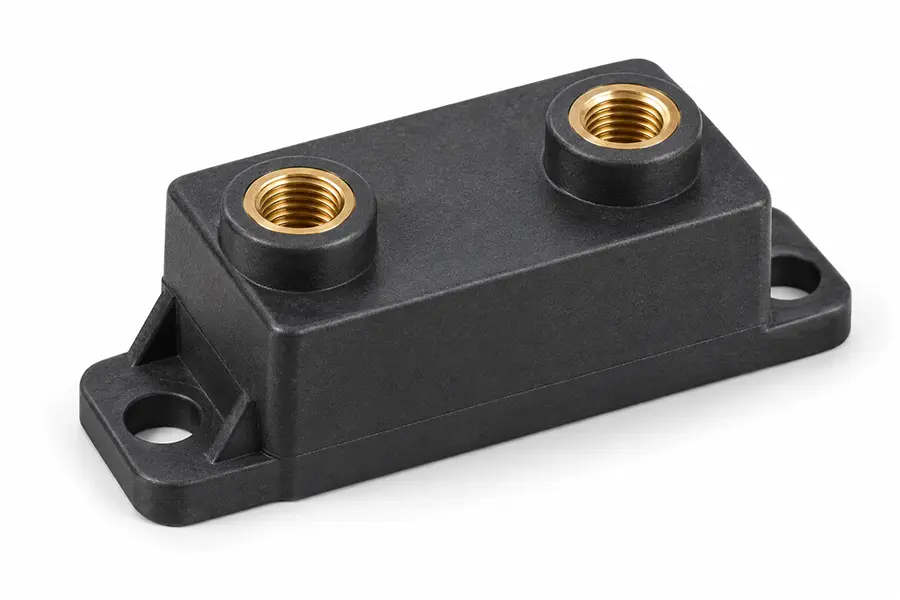
Threaded Inserts
Mold brass or stainless steel threaded inserts into high-temperature plastic housings, brackets, and mounting components to provide metal fastening points.
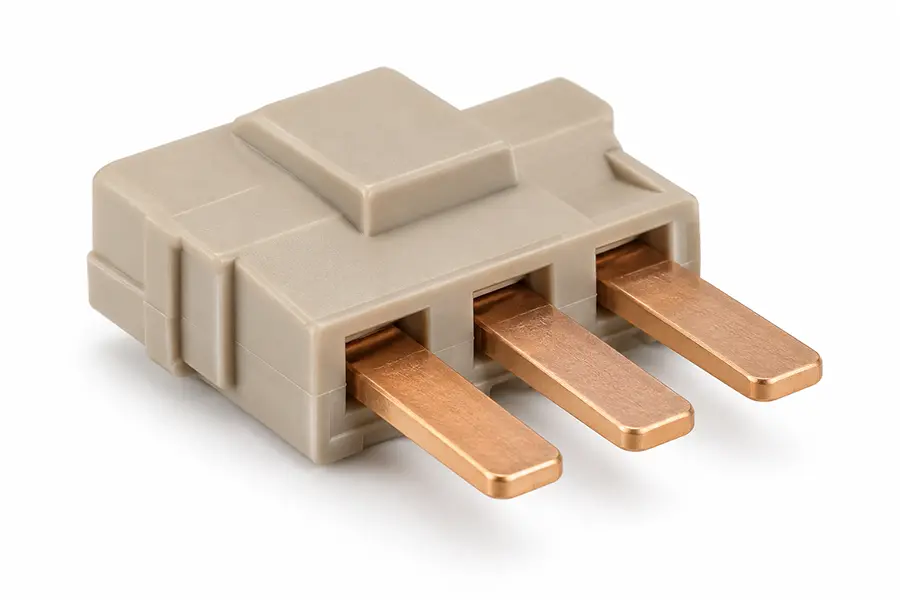
Terminals & Contacts
Integrate conductive terminals and contacts into a molded insulating body, with exposed connection surfaces and terminal spacing defined by the component design.
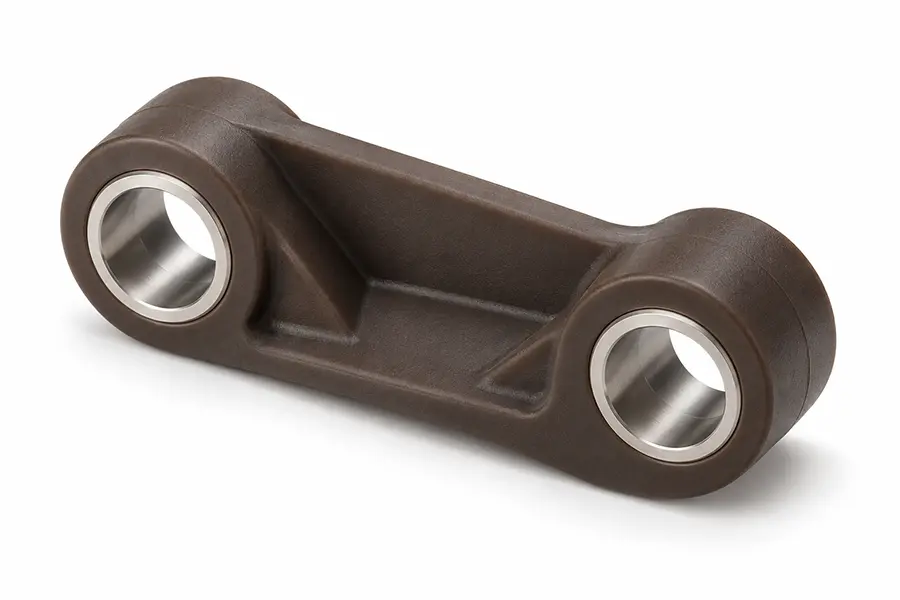
Pins & Bushings
Incorporate metal pins, sleeves, and bushings into plastic structures where the design calls for a metal bore, locating feature, or supported mounting interface.
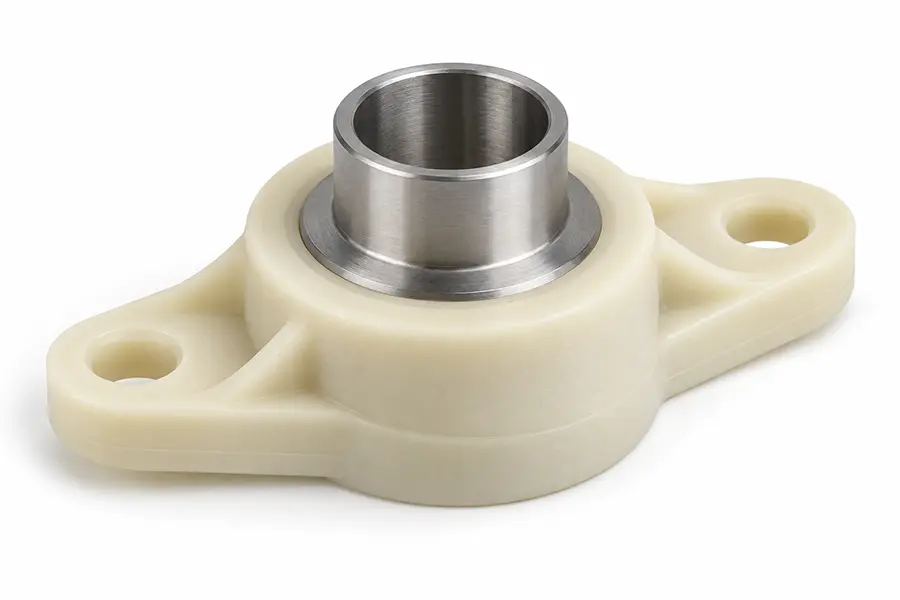
Custom Metal Inserts
Combine custom machined or stamped metal inserts with molded plastic features to meet specific positioning, attachment, and component integration requirements.
High-Temperature Plastics for Insert Molding
Select a resin around your operating temperature, electrical requirements, chemical exposure, and metal insert design. The exact grade, reinforcement, and molding process are reviewed for each project.
| Material | Application Focus | Insert Molding Review |
|---|---|---|
| Medical-Grade PEEK | Components with specified medical material, traceability, and sterilization requirements. | Confirm the exact grade, intended contact conditions, sterilization method, and metal insert compatibility. |
| General-Purpose PEEK | Mechanical and electrical components exposed to demanding thermal and chemical conditions. | Review insert retention, molding shrinkage, thermal expansion differences, and loads at operating temperature. |
| PAI | Precision components requiring mechanical performance under elevated temperatures. | Confirm an injection-molding grade, processing conditions, post-curing requirements, and dimensional changes around inserts. |
| PPSU | Housings and assemblies with repeated cleaning or steam sterilization requirements. | Review the cleaning cycle, chemical exposure, wall thickness, and stress around metal features. |
| PEI | Electrical housings, terminal supports, and structural insulating components. | Check grade-specific electrical and flammability requirements, insert spacing, and residual molding stress. |
| LCP | Small connectors, terminal carriers, and thin-wall electrical components. | Review flow direction, weld-line placement, terminal positioning, and dimensional behavior in thin sections. |
| PVDF | Insulating components and assemblies exposed to specified chemicals. | Confirm temperature and chemical compatibility, creep under load, and the design of mechanical retention features. |
| PES / PESU | Electrical and fluid-handling components with thermal or cleaning requirements. | Review resin drying, chemical exposure, molding stress, and the geometry surrounding each insert. |
Materials Requiring Separate Process Review
These materials require grade-specific assessment before selecting a manufacturing route.
PBI
Unfilled PBI and injection-moldable PBI blends use different processing routes. Confirm the exact formulation and its suitability for incorporating metal inserts.
PTFE
Conventional PTFE requires a different processing route from standard thermoplastic injection molding. Metal integration and alternative manufacturing methods require separate review.
Include continuous and peak temperatures, exposure duration, mechanical loads, chemicals, and electrical requirements. Material suitability is confirmed against the selected grade and finished component design.
Insert Molding vs. Overmolding
Both processes mold plastic around an existing component. In typical applications, insert molding integrates metal features into plastic parts, while overmolding adds another material layer to a preformed substrate.
Insert Molding
A preformed insert is positioned in the mold before plastic is injected around it. Selected areas, such as threads, contact surfaces, or metal bores, remain exposed for assembly or function.
- Typical Combination
- Metal inserts + high-temperature plastic
- Main Purpose
- Integrate fastening points, electrical terminals, locating pins, or metal bearing surfaces.
- High-Temperature Focus
- Review resin performance, insert retention, and thermal expansion differences between the metal and plastic.
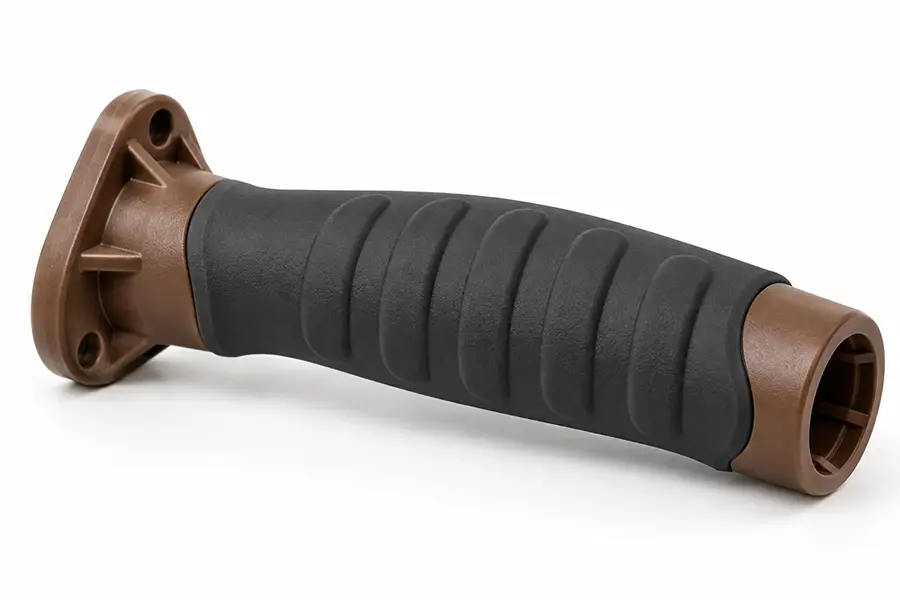
Overmolding
A second material is molded onto or around a preformed substrate. The added layer provides a functional surface or feature, such as a soft grip, protective covering, or sealing element.
- Typical Combination
- Elastomer + rigid plastic, or another compatible material pair
- Main Purpose
- Add grip, cushioning, protection, or sealing features to an existing component.
- High-Temperature Focus
- Review both materials and their interface. A heat-resistant substrate alone does not establish the assembly’s temperature capability.
Insert Molding FAQs
Answers to common questions about high-temperature plastics, metal inserts, component design, and project quotations.
What information do you need for an insert molding quote?
Send your assembly CAD files, plastic part and insert drawings, preferred resin grade, and expected quantities. Include critical tolerances, exposed metal surfaces, operating temperatures, and any electrical or mechanical testing requirements. Let us know whether you will supply the inserts or need support with their manufacture or sourcing.
How is a high-temperature plastic selected for insert molding?
Selection starts with continuous and peak temperatures, exposure duration, mechanical loads, chemicals, and electrical requirements. We then review the exact resin grade alongside the insert material and component geometry. Reinforcement, molding shrinkage, and thermal expansion must also be considered when evaluating the finished assembly.
Can metal and plastic expand differently during heating?
Yes. Differences in thermal expansion can create stress at the metal–plastic interface during heating and cooling. Material pairing, wall thickness, insert geometry, and retention features are reviewed together to address cracking, loosening, and dimensional changes. Thermal-cycle testing can be specified to validate performance under the intended service conditions.
What types of metal inserts can be incorporated?
Common options include threaded inserts, electrical terminals, contact pins, bushings, sleeves, and custom machined or stamped components. Brass, copper alloys, and stainless steel are reviewed according to the application. Each insert must have suitable geometry, surface condition, and dimensional consistency for positioning and retention during molding.
How are inserts secured inside the molded plastic?
Retention commonly relies on mechanical features such as grooves, knurls, shoulders, or through-holes that the plastic forms around. The design is reviewed against pull-out loads, assembly torque, and available plastic thickness. Adhesion between the resin and metal should not be assumed without evaluating the specific material pair and surface preparation.
Can threads and electrical contact surfaces remain exposed?
Yes. Mold locating and shut-off features are designed to keep specified areas accessible while plastic forms around the rest of the insert. Mark exposed surfaces and allowable flash limits on your drawings. Insert tolerances and tooling access are reviewed to assess how these areas can be protected during production.
Can RJC manufacture the inserts or use customer-supplied inserts?
Both arrangements can be reviewed. RJC can assess insert manufacturing or sourcing requirements, and customer-supplied inserts can be evaluated for molding compatibility. Before production, we agree on drawings, tolerances, material specifications, surface treatments, incoming inspection, and supply quantities.
What inspections and functional tests can be included?
The inspection scope can include insert position, critical dimensions, thread condition, exposed surfaces, flash, and visible cracking. Pull-out, torque, electrical insulation, or thermal-cycle tests are agreed according to the application. Specify required test methods and acceptance criteria during quotation so the validation scope is clear.
Discuss Your High-Temperature Insert Molding Project
Share your part design, insert details, and operating conditions. Our team will review the material pairing, tooling requirements, and production scope for your custom components.
What to Send
- 3D CAD files and available insert drawings
- Preferred resin grade and metal specifications
- Operating temperatures and performance requirements
- Expected quantities and critical tolerances
Share your available files, even if the material or insert design is still being finalized.