
Robotics
Injection Molding
Services
Custom plastic parts for robotic systems, combining high-temperature materials with precision injection molding.
and application requirements.
- High-Temperature Plastics
- Insert & Overmolding
- In-House Tooling
Injection Molded Parts for Robotics
Explore plastic components for robotic motion, electrical systems, and protective assemblies.
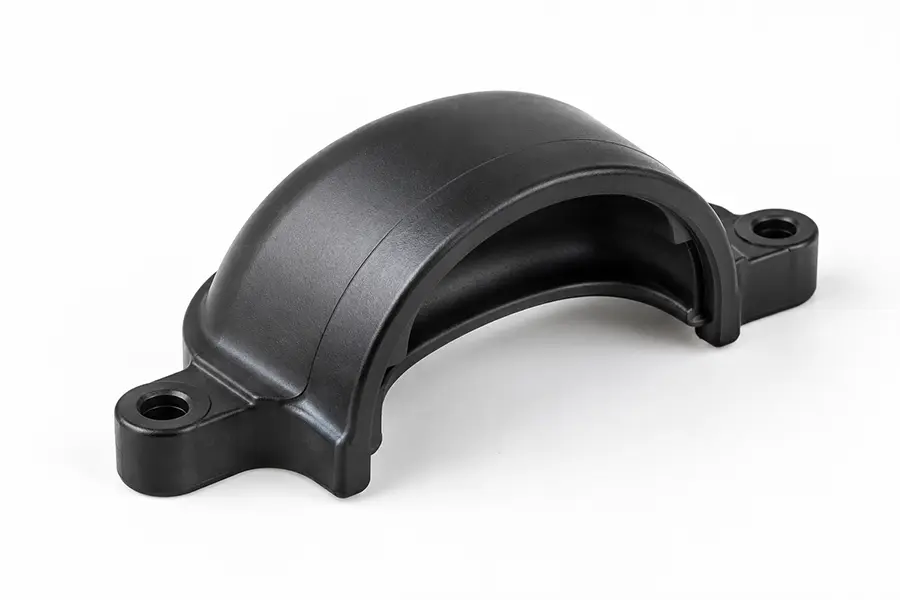
Motor end covers and joint enclosures with integrated mounting, reinforcing, and locating features.
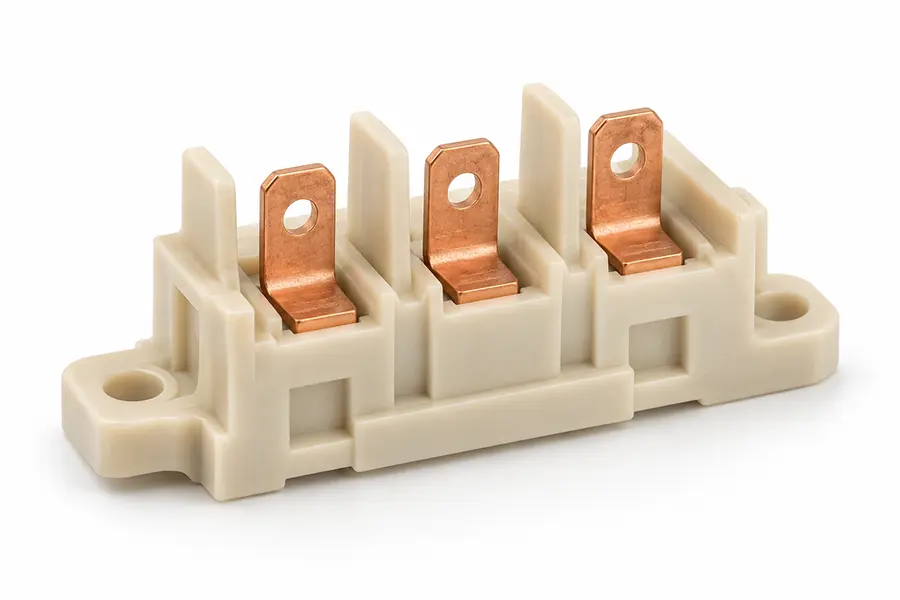
Heat exposure · Assembly fit · WeightTerminal carriers, insulating barriers, and motor insulation components for compact electrical assemblies.
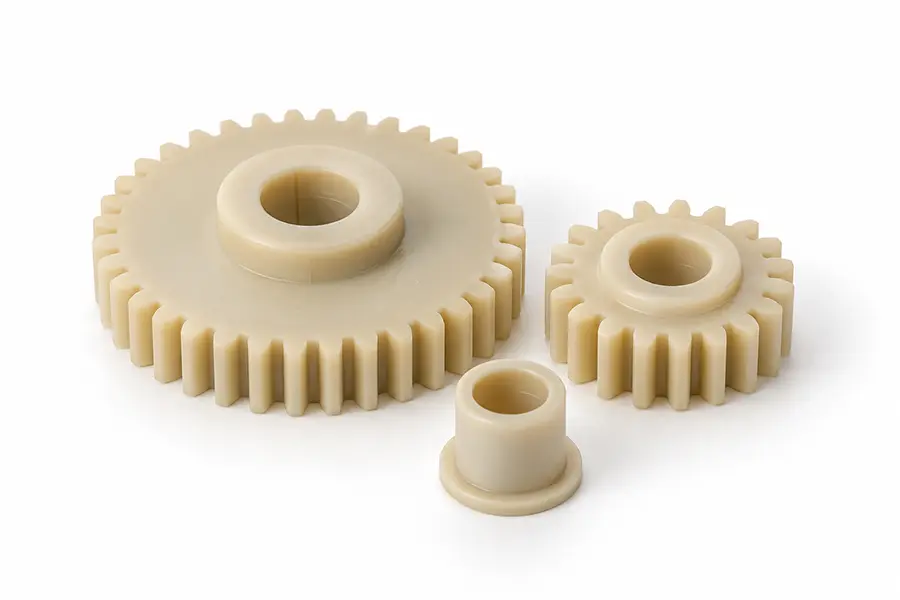
Electrical insulation · Thermal stabilityGears, bushings, and guides developed around friction, load, and repeated movement.
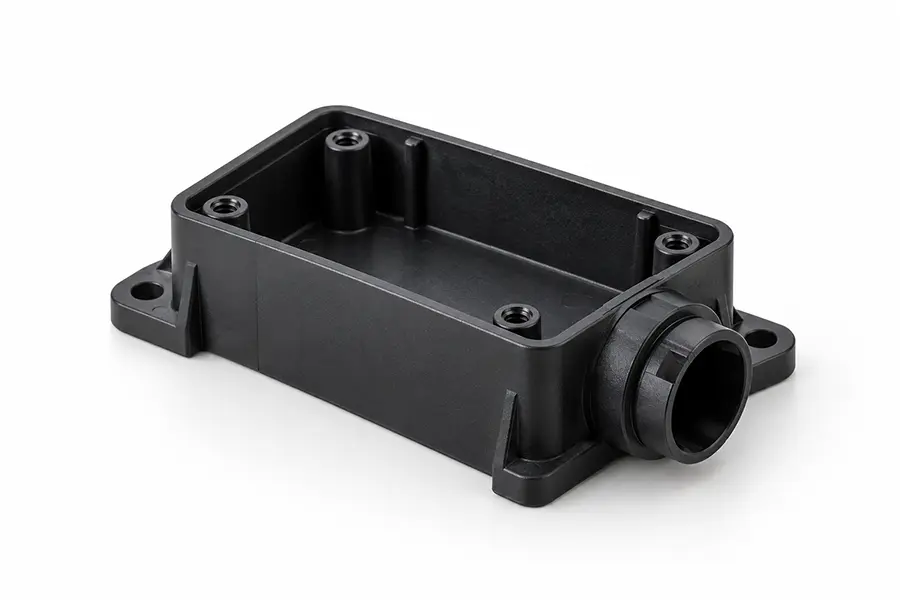
Wear behavior · Load · Operating temperatureProtective enclosures and connector bodies with defined mounting points and cable interfaces.
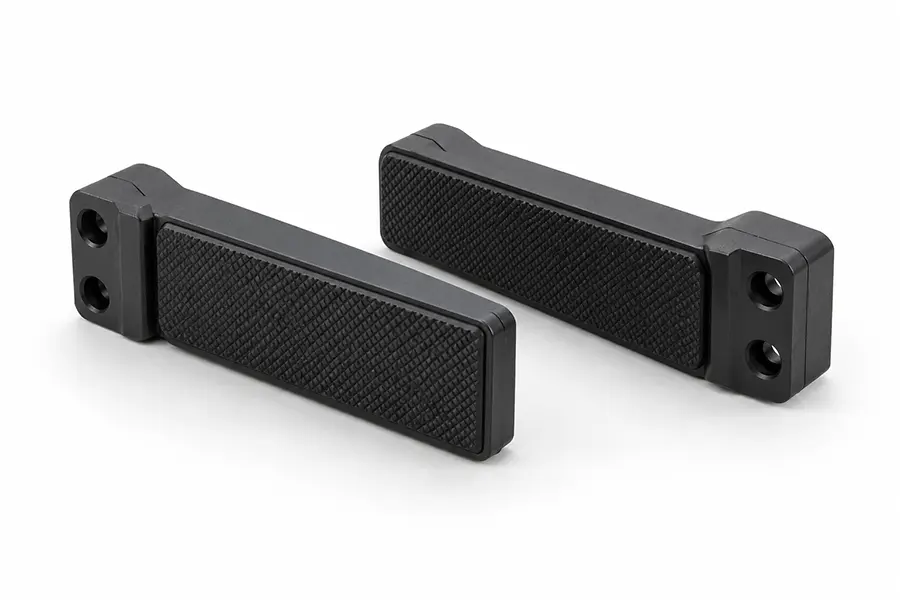
Positioning · Protection · ConnectionCustom finger pads, gripping surfaces, and tool covers for robotic handling applications.
Grip · Contact behavior · Part protectionJoint covers and cable routing components shaped around installation space and movement clearance.
Cable routing · Clearance · Protection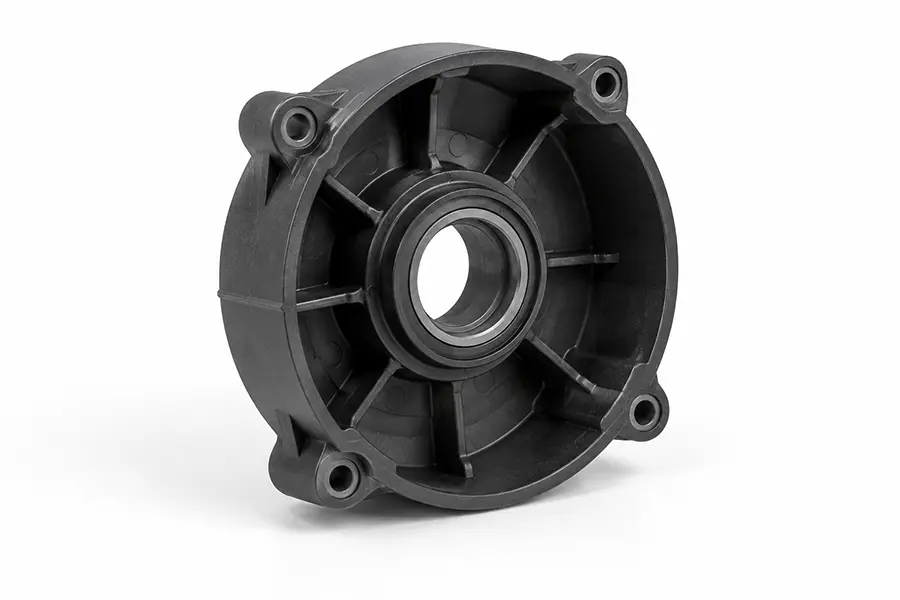
Metal-to-Plastic
Conversion for Robotics
Evaluate high-performance plastics for selected metal housings, covers, guides, and brackets in your robotic assembly.
We review material grade, part geometry, and operating conditions together to identify where injection molding can support your design.
- PEEK
- PPS
- PEI
- PPA
Unfilled or reinforced grades, selected for the application.
Reduce Moving Mass
Lower part weight in selected moving assemblies. The final benefit depends on the geometry needed to meet stiffness and load requirements.
Joint covers · Tool covers · Moving bracketsIntegrate Part Features
Combine ribs, mounting bosses, clips, and cable guides into a molded component to simplify selected assembly operations.
Fewer separate features · Integrated locating pointsBuild In Functional Properties
Select grades for electrical insulation, chemical resistance, or sliding contact while reviewing their thermal and mechanical limits.
Insulating carriers · Guides · Wear componentsWhat Needs to Be Checked?
Conversion starts with the operating requirements and may require a redesign of the original metal geometry.
Load & Stiffness
Deflection, impact, fatigue, and long-term creep.
Heat & Expansion
Service temperature, heat dissipation, and thermal movement.
Fit & Fastening
Molding shrinkage, tolerances, inserts, and joint strength.
Wear & Environment
Contact conditions, lubrication, chemicals, and moisture.
Quality & Traceability
Material grade checks, critical dimension inspection and batch records aligned with your project requirements.
Explore Quality ControlFrom CAD to Production
A coordinated process covering drawing review, mold development, sample approval and production delivery.
See Our ProcessEngineering & Manufacturing
In-house mold making, high-temperature plastic molding and engineering support from prototypes to production.
Why Work with RJCRobotics Injection
Molding FAQs
Practical answers about high-temperature materials, precision fits, and custom robotic components.
Which plastics should be considered for parts near robotic motors?
PEEK, PPS, PEI, and PPA are among the materials that may be evaluated. Selection depends on continuous and peak temperatures, exposure time, mechanical load, insulation needs, and the specific grade. Share the expected temperature at the component and its operating conditions for review.
How do you choose between PEEK and PPS for robotic components?
We compare mechanical requirements, temperature exposure, chemical environment, wear conditions, and cost. Reinforcement and additives can significantly change performance, so the comparison should use specific grades and application data rather than resin names alone.
Will high-temperature plastics maintain precise assembly fits?
Assembly fit depends on molding shrinkage, thermal expansion, moisture absorption, fiber orientation, and part geometry. Critical interfaces should be defined on the drawing and assessed under the intended operating conditions. Tooling adjustments or secondary machining may be considered for selected features.
Can molded plastic replace metal in a robotic assembly?
Selected housings, covers, guides, and brackets may be suitable candidates. The review considers stiffness, creep, fatigue, heat dissipation, fastening, and dimensional requirements. Conversion often requires changes to wall thickness, ribs, and connection features.
Can you mold gears, bushings, and other wear components?
These components can be reviewed for injection molding. Material and geometry depend on load, speed, mating material, lubrication, temperature, and required service life. Wear performance should be validated under representative operating conditions.
Can metal inserts and soft gripping surfaces be integrated?
Insert molding can integrate threaded inserts or terminals, while overmolding can add compatible gripping or cushioning materials. We review insert retention, material compatibility, bonding, and temperature exposure before recommending the manufacturing approach.
What information should I provide for a quotation?
Send your 3D CAD files, available 2D drawings, material specification, and expected quantities. Include critical tolerances, operating temperatures, loads, mating parts, and inspection or testing requirements. If the material is undecided, share the application conditions for review.
Let’s Review Your
Robotic Plastic Part.
Share your design and application requirements. Our team can help review material options, part manufacturability and the next steps toward production.
A good review starts with:
- CAD files and critical dimensions
- Material and operating conditions
- Loads, mating parts, and assembly requirements
- Quantity and documentation needs