
Industrial Equipment
Injection Molding
Services
Custom injection molding for industrial components exposed to heat, chemicals, and mechanical loads, with high-temperature plastics and in-house tooling support.
and operating requirements.
- High-Temperature Plastics
- Insert & Overmolding
- In-House Tooling
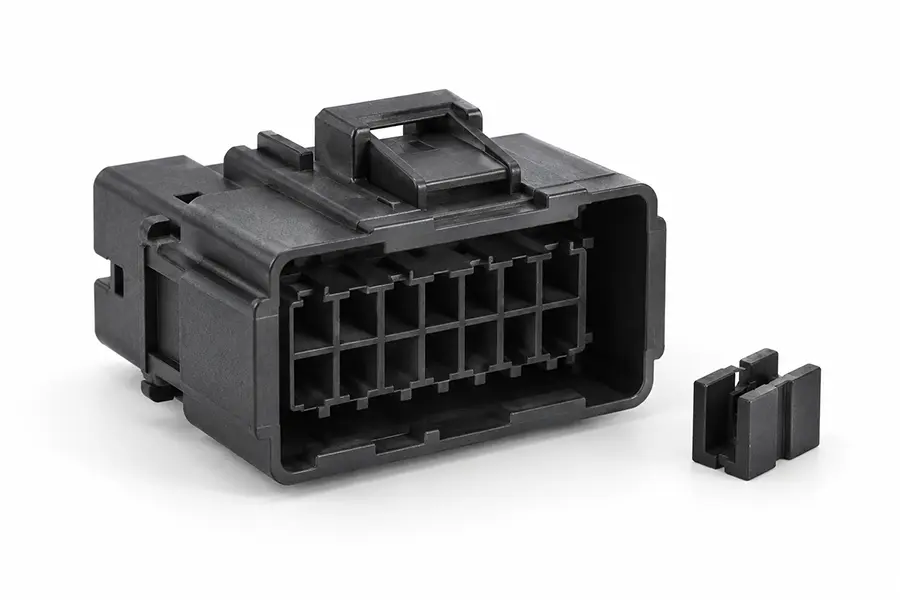
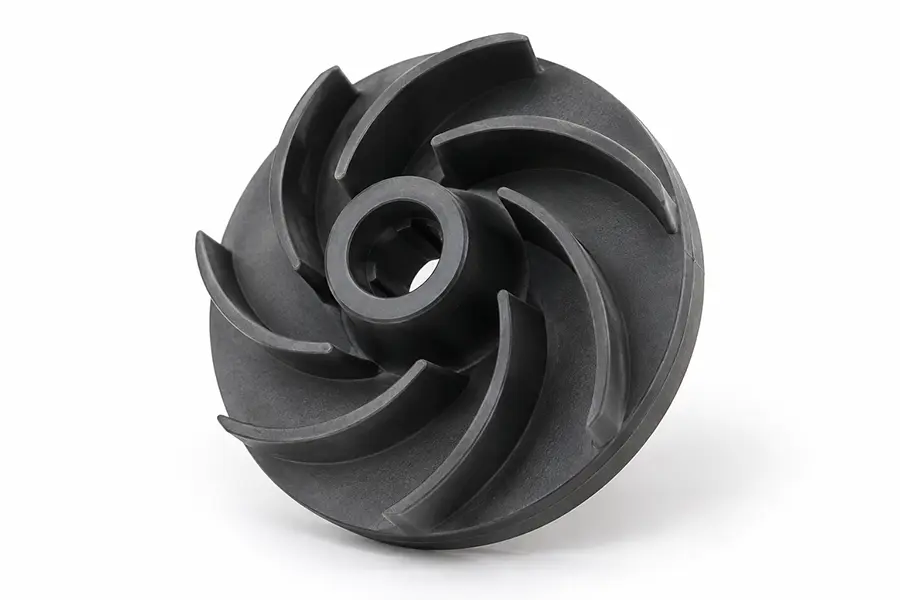
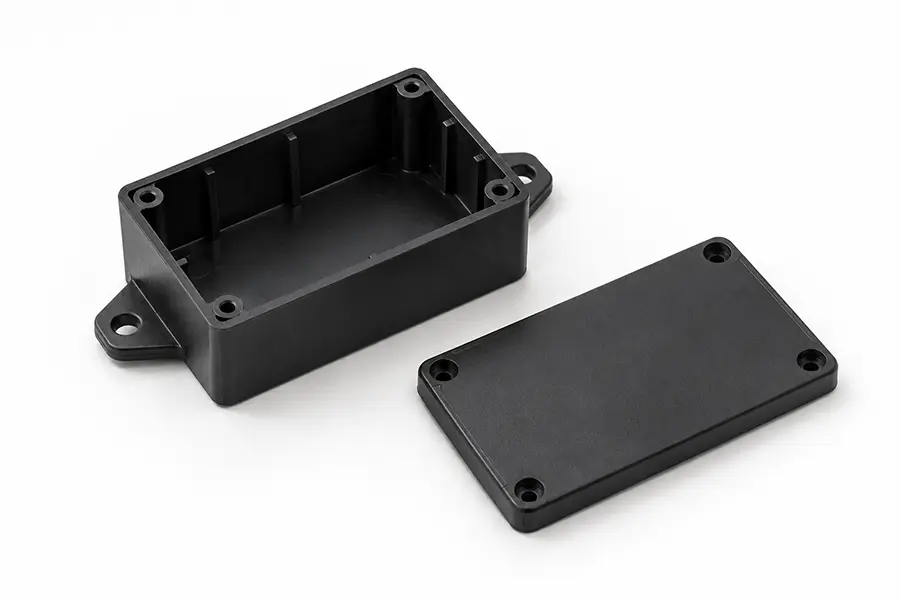
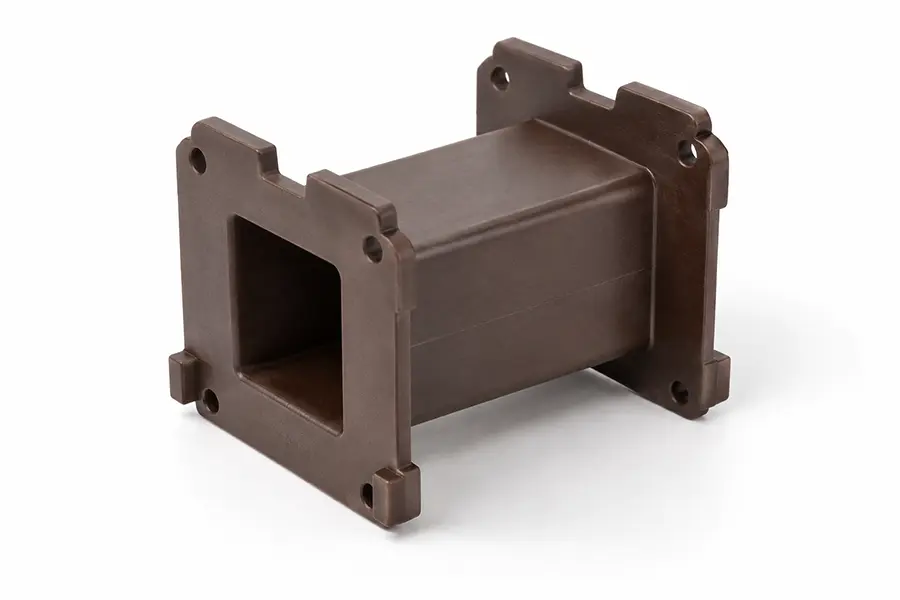
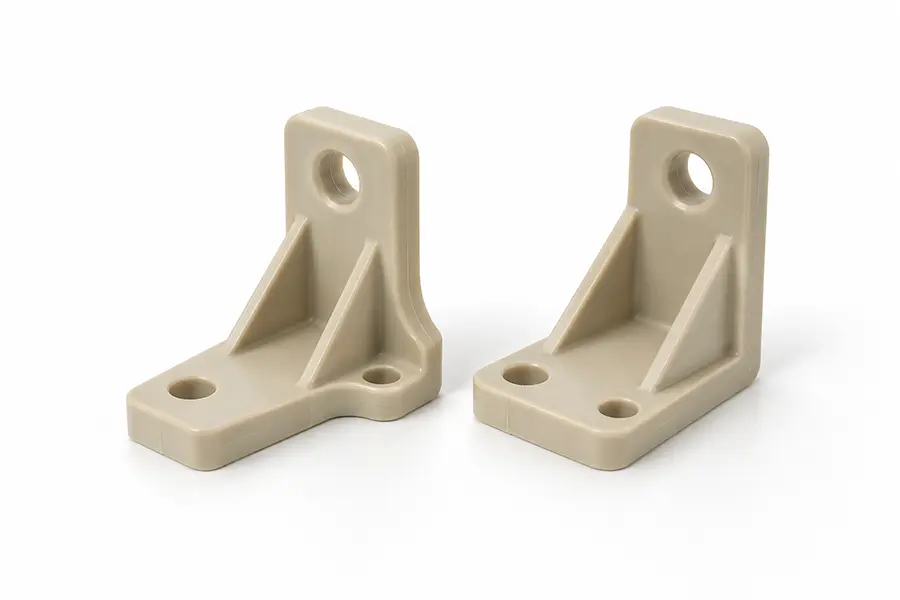
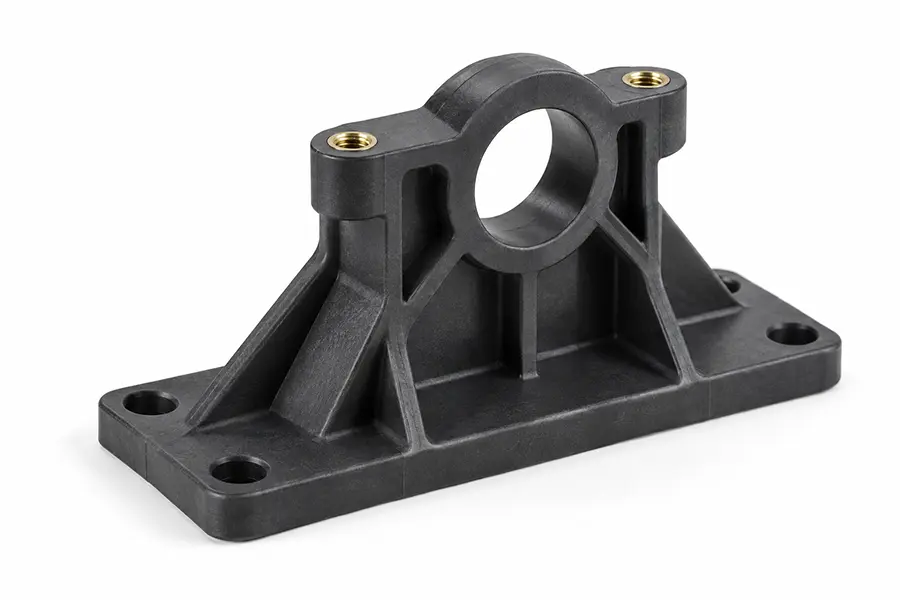
Built Around Industrial Operating Conditions
Define how the part will operate, so its structure, tooling, and molding requirements can be reviewed together.
Heat resistance starts with the actual duty cycle.
Continuous heat, short temperature peaks, and repeated heating and cooling place different demands on a molded component.
Review temperature alongside load and exposure time to address creep, dimensional changes, and fit during operation.
Electrical Insulation
Review operating voltage, creepage and clearance distances, and insulation requirements for connectors, coil supports, and electrical housings.
Chemical Exposure
Identify oils, coolants, cleaning agents, and process fluids, including their concentration, temperature, and contact duration.
Dimensional Stability
Define critical fits, sealing surfaces, and alignment features, with temperature and moisture conditions included in the tolerance review.
Mechanical & Assembly Loads
Account for fastening torque, sustained loads, vibration, and repeated assembly when reviewing ribs, bosses, and metal insert locations.
Share operating conditions alongside your CAD files and drawings. Final performance should be verified through testing under the intended service conditions.
Quality & Traceability
Material grade verification, critical dimension inspection, and batch records aligned with your industrial component requirements.
Explore Quality ControlFrom CAD to Production
A coordinated process covering design review, mold manufacturing, sample approval, and production delivery.
View Our WorkflowEngineering & Manufacturing
In-house mold making and high-temperature plastic molding, with engineering support for industrial part development and production.
Discover Our CapabilitiesIndustrial Injection Molding FAQs
Design, operating conditions, and manufacturing considerations for your industrial plastic components.
Have a specific part in mind?
Discuss Your ProjectWhat types of industrial parts can you injection mold?
Typical components include electrical connector housings, insulators, sensor enclosures, coil bobbins, pump impellers, and mounting brackets. Part geometry, operating conditions, and production quantities guide the tooling and molding review.
What information is needed for parts that operate at high temperatures?
Provide continuous and peak temperatures, exposure duration, thermal cycling, and mechanical loads. Include critical fits and mating-part details so dimensional changes and long-term deformation can be considered during design review.
Can molded parts be used in contact with oils, coolants, or cleaning agents?
Suitability is reviewed against the specific fluid, concentration, temperature, contact duration, and stress on the part. Share fluid specifications and cleaning procedures so compatibility can be assessed and relevant application testing defined.
Can you mold metal threads or electrical terminals into the part?
Yes. Insert molding integrates threaded inserts, bushings, or terminals into suitable plastic designs. The review covers insert positioning, retention, surrounding wall thickness, and thermal expansion between the metal and plastic.
How are electrical insulation requirements addressed?
Provide operating voltage, required creepage and clearance distances, environmental conditions, and applicable testing requirements. These inform the review of component geometry and grade-specific insulation data.
Can high-temperature plastic parts replace metal components?
Selected housings, supports, guides, and brackets are candidates for evaluation. The design must account for stiffness, creep, thermal expansion, wear, and fastening loads. Geometry changes and testing under service conditions are often needed.
What should I provide for a quotation?
Send 3D CAD files, available drawings, expected quantities, and the specified material or operating requirements. Include critical tolerances, insert details, inspection requirements, and delivery expectations.
Let’s Review Your Industrial Part.
Share your CAD files, quantities, and operating conditions to discuss tooling, molding, and the next manufacturing steps.