
Consumer Electronics
Injection Molding
Services
Precision injection molding for electronic components, with high-temperature plastics for heat resistance, electrical insulation and reliable fit.
and application requirements.
- Connectors & Insulators
- Internal Frames & Brackets
- Power & Charging Components
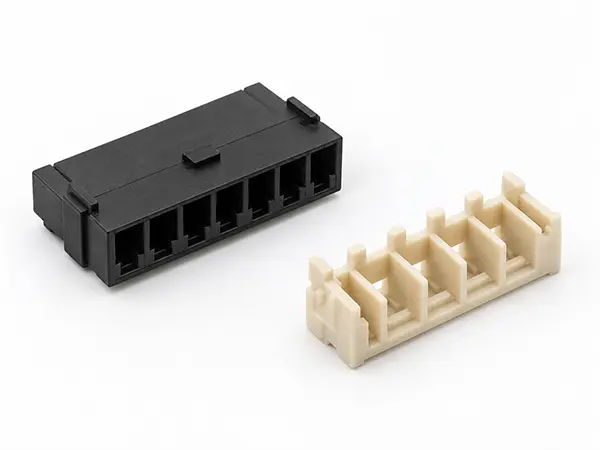
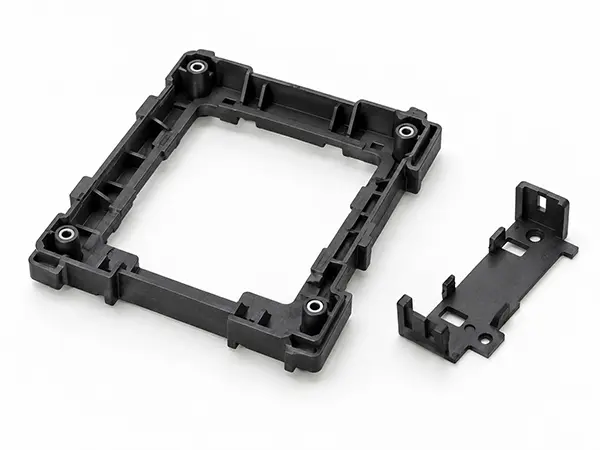
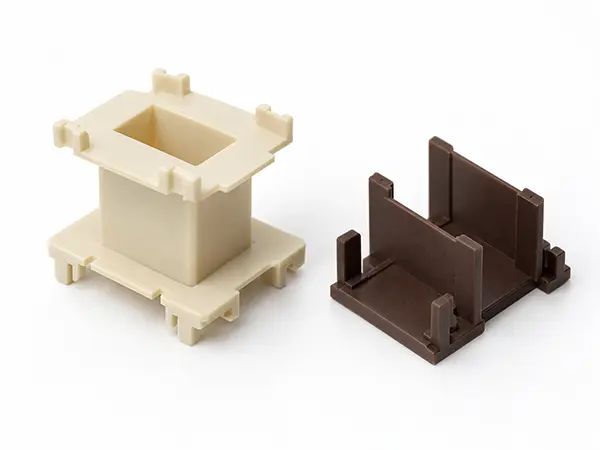
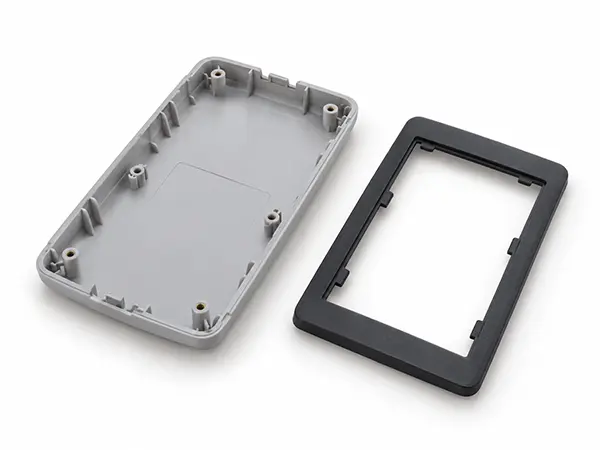
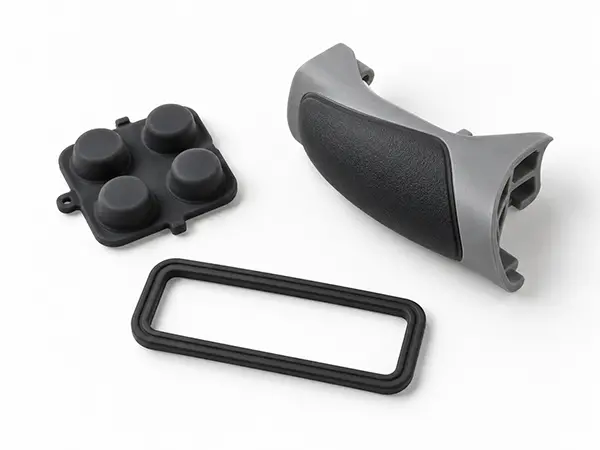
Precision Where Electronic Assemblies Need It
Contact alignment, enclosure fit and internal clearances start with the molded part. RJC reviews critical features before tooling to address filling, shrinkage and assembly requirements.
Small features. Critical connections.
Locating surfaces, contact cavities and mounting points are reviewed against mating components, with inspection focused on the dimensions that control fit.
Thin Walls & Small Features
Review wall transitions, flow paths and venting to fill narrow ribs, contact cavities and compact features without short shots or excessive flash.
Connector Fit & Alignment
Identify the datums and tolerances that control contact pitch, mating surfaces and latch engagement, including their contribution to the assembly tolerance stack.
Insert Position & Retention
Plan insert locating and support to keep terminals and threaded inserts in position during molding while maintaining specified exposed surfaces and plastic coverage.
Warpage & Dimensional Stability
Review material shrinkage, fiber orientation, gate location and cooling around flat frames and covers to control distortion and preserve assembly clearances.
Define the finish before tooling.
Specify cosmetic zones, texture, color and acceptable gate or ejector marks early. Surface expectations are reviewed against the selected resin, particularly for glass-filled high-temperature grades, and confirmed through approved samples.
Quality & Traceability
Material verification, critical dimension inspection and appearance checks aligned with your electronic component requirements.
Explore Quality ControlFrom CAD to Production
A coordinated process covering manufacturability review, tooling, sample approval and production delivery.
View Our WorkflowEngineering & Manufacturing
In-house mold making, high-temperature plastic molding and integrated process support for custom electronic parts.
Discover Our CapabilitiesConsumer Electronics Injection Molding FAQs
Practical answers about heat-resistant materials, precision features and appearance requirements for electronic components.
Have a specific part in mind?
Discuss Your ProjectHow do you select high-temperature plastics for electronic components?
Selection starts with operating temperature, electrical insulation, mechanical loads and assembly conditions. RJC reviews PPS, LCP, PPA, PEI and PEEK grades against these requirements, together with wall thickness, dimensional tolerances and any soldering or other short-term heat exposure.
Can you mold thin-wall connectors and small precision features?
Yes. Share the part geometry, resin grade and critical dimensions for a manufacturability review. Achievable wall thickness and tolerances are assessed around flow length, cavity details, tooling and inspection access before the mold design is finalized.
Can metal contacts or threaded inserts be integrated into molded parts?
Yes. Insert molding integrates metal contacts, terminals and threaded inserts into plastic components. The review covers insert positioning, retention, exposed contact areas and plastic coverage, together with the molding temperature and assembly requirements.
Can you work with specified flame-retardant material grades?
Yes. Please provide the exact resin grade and required fire-performance documentation, including the relevant part thickness and color. These requirements are reviewed during material selection and quotation rather than inferred from the polymer name alone.
What surface finishes are available for visible components?
Options include textured, matte and polished mold surfaces, with painting or printing reviewed where required. The finish is matched to the resin and part geometry. Specify cosmetic zones, color references and acceptable gate or ejector marks so appearance can be confirmed through approved samples.
What information is needed for a quotation?
Send 3D CAD files, dimensioned drawings, material requirements and expected quantities. Include operating temperatures, critical fits, appearance specifications, metal insert details and any required material or inspection documentation.
Discuss Your Consumer Electronics Part.
Share your CAD files, material requirements, operating temperatures and appearance specifications to review tooling and production options.