
Two-Shot Injection
Molding Services
Combine two materials or colors in one integrated part. From mold development to production, RJC supports your two-shot molding project.
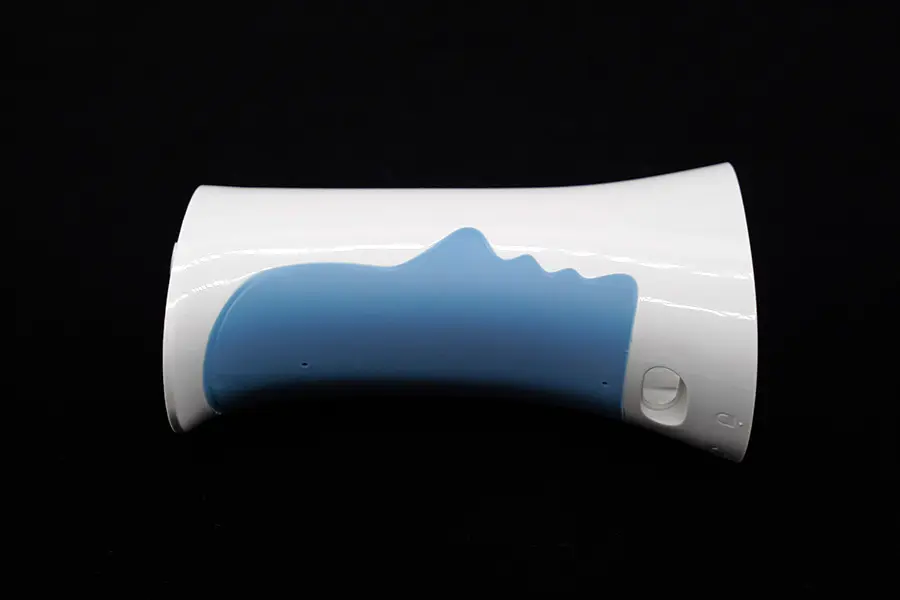
Advantages of Two-Shot Molding
Bring materials, appearance, and function together in one part.
Fewer Components.
Less Assembly.
Integrate features into a single molded part to reduce separate components, fastening, and handling.
Rigid Support. Soft-Touch Comfort.
Combine structural materials with soft grips or sealing features to suit your application.
Color and Texture, Built In.
Create contrasting colors and tactile surfaces while reducing the need for secondary decoration.
Repeatable Material Alignment.
Reduce manual repositioning between shots to support consistent placement across production runs.
Two-Shot Molded Parts for Your Application
Different material combinations for grip, appearance, and integrated sealing.
Soft grip
Soft-Touch Handles & Grips
A rigid body provides support, while a softer contact surface improves handling and comfort.
Second color
Two-Color Buttons & Controls
Combine contrasting colors in control components for clear identification and a coordinated appearance.
Sealing feature
Housings with Integrated Seals
Integrate a sealing feature into the housing to reduce separate gasket placement during assembly.
High-Temperature Materials for Two-Shot Molding
Explore high-performance resins for integrated parts exposed to heat, chemicals, and demanding service conditions.
| Material | Key Properties | Two-Shot Design Opportunities | Application Examples |
|---|---|---|---|
| PEEKPolyetheretherketone | High-temperature strength, chemical resistance, and wear resistance | Evaluate distinct functional regions using compatible PEEK grades | Precision equipment components, wear parts, and medical device components |
| PPSPolyphenylene Sulfide | Heat resistance, chemical resistance, and dimensional stability | Evaluate structural and electrical functions through selected grade combinations | Electrical housings, sensor components, and fluid-handling parts |
| PEIPolyetherimide | Heat resistance, rigidity, and electrical insulation | Evaluate contrasting colors or visual regions with compatible grades | Electrical components, instrument housings, and equipment interfaces |
| PPSUPolyphenylsulfone | Toughness, heat resistance, and resistance to repeated steam sterilization | Evaluate integrated color identification and functional features | Reusable instrument components and sterilizable equipment parts |
| PSUPolysulfone | Heat resistance, rigidity, and transparency in suitable grades | Evaluate transparent and opaque regions using compatible grades | Fluid-handling components, viewing features, and equipment housings |
| PPAPolyphthalamide | Elevated-temperature stiffness and strength in suitable grades | Evaluate reinforced structural regions with compatible secondary features | Automotive connectors, electrical components, and structural housings |
| LCPLiquid Crystal Polymer | Thin-wall flow, dimensional stability, and heat resistance | Evaluate miniature multi-material features with careful interface design | Precision connectors, electronic components, and compact insulating parts |
Materials listed are options for project evaluation, not pre-approved pairings. Two-shot feasibility depends on the exact grades, interface design, processing conditions, and available equipment.
Two Materials.
One Demanding Environment.
We review both materials against your part’s operating conditions and manufacturing requirements.
Temperature & Exposure
Operating heat, exposure duration, chemicals, and sterilization cycles.
Material Interface
Adhesion, mechanical retention, and performance after thermal cycling.
Molding Compatibility
Processing temperatures, first-shot stability, shrinkage, and warpage.
Two-Shot Mold Design & Engineering Support
Coordinate both shots around the thermal and dimensional demands of high-temperature plastics.
Two Shots.
One Coordinated Tool.
RJC reviews your part geometry, selected resin grades, and production requirements to develop a suitable tooling approach.
The review covers how the first shot is supported, how the second material fills, and how the finished part releases.
3D CAD · Resin grades · Critical dimensions · Expected volume
Interface & Shut-Off Design
Review material boundaries, retention features, and shut-off surfaces to control the interface and reduce flash.
Material boundary control
Thermal Management
Plan mold heating and cooling around both resin grades, including first-shot stability during the second injection.
Coordinated temperature control
Positioning & Transfer
Evaluate rotation, core movement, or transfer options against part geometry, tool layout, and equipment compatibility.
Repeatable first-shot location
Filling & Part Release
Review gates, venting, draft, and ejection to manage filling, shrinkage differences, and release of the combined part.
Balanced filling and demolding
Two-Shot Molding vs. Overmolding
Choose the right approach for your high-temperature plastic part, material combination, and production volume.
TWO-SHOT MOLDING
Two Shots in One Coordinated Setup
Two materials or colors are injected in sequence within a coordinated molding setup, with the first shot positioned for the second injection.
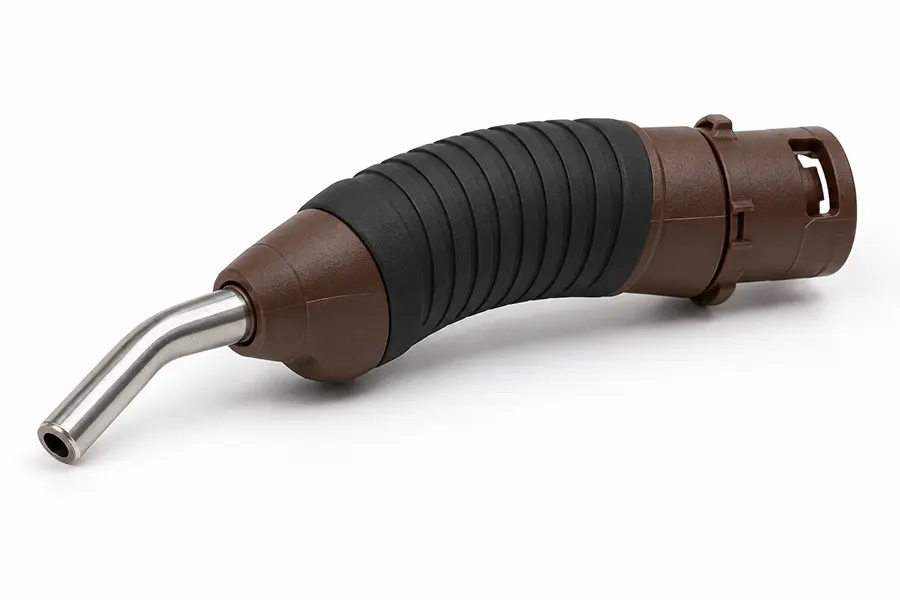
OVERMOLDING
A Second Material Over an Existing Part
A previously made substrate is loaded into a mold, then a second material is molded onto selected areas.
Here, “overmolding” refers to molding over a separately produced substrate. In broader industry usage, two-shot molding can also be considered a form of overmolding.
| Selection Factor | Two-Shot Molding | Overmolding |
|---|---|---|
| Tooling & Equipment | Coordinated two-shot tooling and compatible injection equipment | A substrate mold and an overmold tool, with a loading arrangement |
| Initial Investment | Typically higher due to tooling and equipment complexity | May offer a lower entry cost, depending on the substrate and tool design |
| Production Volume | Often attractive for repeat production where automation offsets the initial investment | Can suit lower volumes, staged production, or existing substrates |
| Part Handling | First-shot positioning is integrated into the molding setup | Substrates are transferred and loaded between molding stages |
| High-Temperature Resins | Both shots require coordinated thermal conditions and first-shot stability | The preformed substrate must withstand the overmolding temperature and pressure |
| Material Bonding | Depends on exact grades, interface design, and processing conditions | Also depends on substrate surface condition and handling between stages |
Surface Finishes for High-Temperature Parts
Define the look of your two-shot part with polished, matte, or textured mold surfaces.
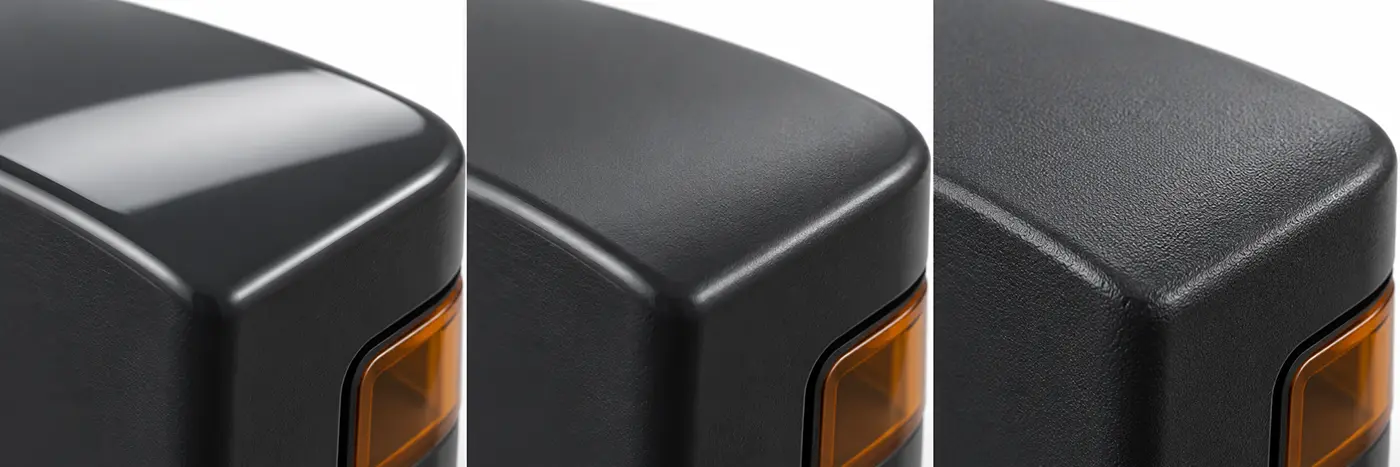
GLOSS
Polished Finish
A smooth, reflective appearance for selected visible surfaces and contrasting design details.
Smooth surface · Defined reflections
MATTE
Fine Matte Finish
A subtle surface with diffused reflections for a restrained, uniform appearance.
Reduced gloss · Subtle grain
TEXTURE
Fine Textured Finish
A visible molded grain that adds surface character and distinguishes selected areas.
Visible grain · Tactile detail
Match or Contrast Both Material Regions.
Specify consistent finishes across the part or use different textures to highlight the two-shot design.
Confirm the Finish with Samples
Final appearance depends on resin grade, reinforcement, color, and molding conditions. Agree on a reference texture or sample during development.
AI-generated surface illustrations for visual comparison only; they do not represent specific SPI grades or production samples.
Quality Control Across Both Shots
Inspection focused on material interfaces, critical dimensions, and the service requirements of high-temperature parts.
Check the Interface.
Verify the Finished Part.
Quality planning starts with your drawing, selected resin grades, and acceptance criteria for the combined part.
Material & Grade Verification
Check resin identification and lot information against the approved specification for each shot.
Interface Integrity
Inspect material boundaries for gaps, lifting, or separation. Define adhesion or retention tests where required.
Dimensions & Shot Alignment
Verify critical dimensions, relative material positions, and mating features against the approved drawing.
Appearance & Molding Defects
Review flash, short shots, sink marks, warpage, color, and surface consistency against agreed samples.
Application-Specific Validation
Agree on heat exposure, thermal cycling, sealing, or sterilization tests according to the intended application.
Agree on What Matters Most.
Define critical dimensions, cosmetic limits, test methods, and documentation needs during sample approval to establish clear production acceptance criteria.
From CAD Review to Two-Shot Production
A coordinated path from high-temperature material selection to approved parts and delivery.
-
CAD & Application Review
Share your design, operating conditions, critical dimensions, and expected production volume.
Define project requirements
-
Material & Feasibility Review
Evaluate exact resin grades, interface design, thermal compatibility, and the tooling approach.
Confirm the proposed approach
-
Mold Design & Build
Develop the two-shot tool around positioning, shut-offs, temperature control, and part release.
Review and approve tool design
-
Trials & Sample Approval
Review molded samples for dimensions, appearance, and interface performance against agreed criteria.
Approve samples and inspection plan
-
Production & Delivery
Proceed with approved production settings, inspection requirements, packaging, and shipment arrangements.
Deliver parts and agreed records
Two-Shot Injection
Molding FAQs
Answers to common questions about high-temperature materials, tooling, and project requirements.
Have a Specific Part in Mind?
Share your design and operating conditions with our team.
Can high-temperature plastics be used in two-shot molding?
High-temperature resins can be considered, but feasibility depends on the exact material grades, part geometry, and molding setup. Each project requires review of processing temperatures, first-shot stability, material retention, and equipment compatibility.
Can PEEK, PPS, or PEI be combined with another material?
A pairing cannot be approved from resin names alone. We review the specific grades, processing windows, shrinkage, and interface design. Mechanical retention may be needed where direct adhesion is insufficient, with performance confirmed through sample testing.
How is the operating temperature of a two-shot part determined?
The finished part must be assessed as a complete assembly. Both materials and their interface need to meet the required temperature, load, exposure duration, and environment. A heat-resistant first material does not automatically give the second material or the interface the same capability.
What is the difference between two-shot molding and overmolding?
Two-shot molding injects materials in sequence within a coordinated molding setup. Overmolding can use a separately produced substrate that is loaded into another mold. The terms overlap: two-shot molding is also considered a form of overmolding in broader industry usage.
Does two-shot molding always create a permanent material bond?
No. Retention may come from material adhesion, mechanical interlocks, or both. The required interface strength should be defined for the application and verified using an agreed test method.
Is two-shot molding suitable for low-volume production?
It depends on part complexity, tooling investment, and expected lifetime volume. For smaller quantities, separate molding stages may be more economical. We review the production plan before recommending a tooling approach.
Can two-shot parts provide sealing or withstand repeated sterilization?
These requirements need application-specific validation. Sealing depends on geometry, material behavior, interface integrity, and assembly conditions. Sterilization suitability also depends on the method, temperature, chemicals, and number of cycles specified for the finished part.
What information is needed for a quotation?
Please provide 3D CAD files, available drawings, resin grades or material requirements, colors, expected quantities, and critical dimensions. For high-temperature applications, include operating temperatures, exposure conditions, and any testing or documentation requirements.
Start Your Two-Shot
Molding Project
Share your CAD files, material requirements, and operating conditions for a high-temperature two-shot molding review.
Tell Us About Your Part
- 3D CAD files and critical dimensions
- Resin grades and color requirements
- Operating temperature and exposure
- Expected quantities and delivery needs