
High-Temperature Overmolding Services
Custom overmolded components for applications that demand heat resistance, electrical insulation, and reliable performance under thermal cycling.
RJC supports high-temperature plastic projects with material selection, substrate compatibility review, DFM analysis, and in-house tooling. We evaluate each material combination against your operating temperatures, part geometry, and production requirements.
- Application-specific material review
- Bonding & retention evaluation
- In-house mold manufacturing
Share your CAD files, operating temperature range, expected quantity, and material requirements.
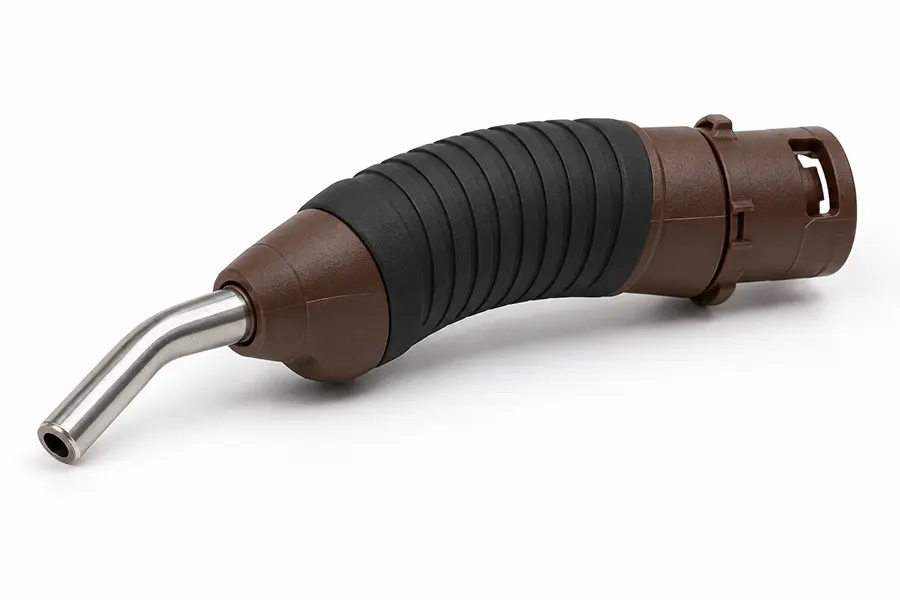
Overmolding Solutions for Your Parts
Explore different substrate and overmold combinations for high-temperature applications. Material grades and interface design are reviewed against your part’s operating requirements.
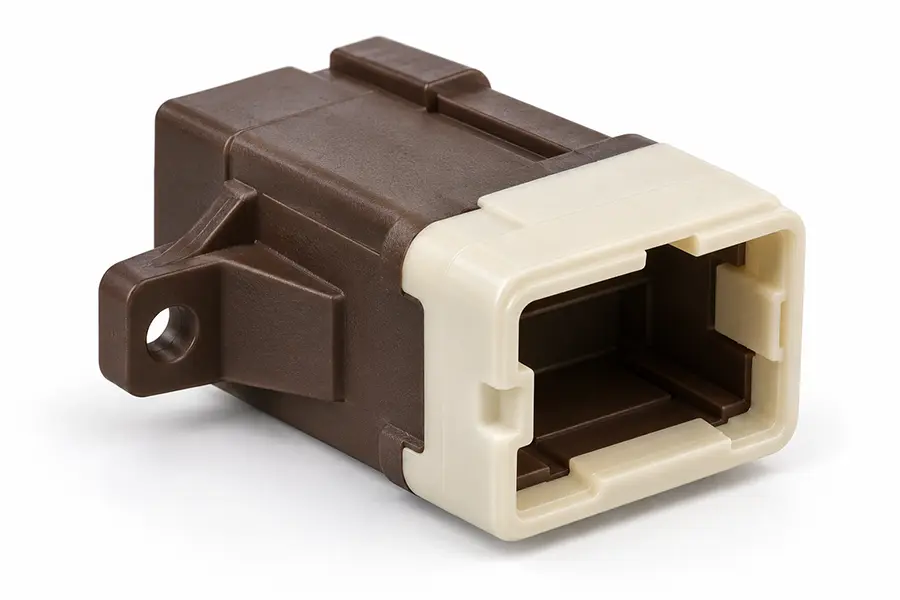 Rigid substrate + rigid overmold
Plastic-on-Plastic Overmolding
Mold a second rigid plastic onto a preformed plastic substrate to combine structural support with localized protective or insulating features.
Reviewed for processing compatibility, substrate stability, and interface retention.
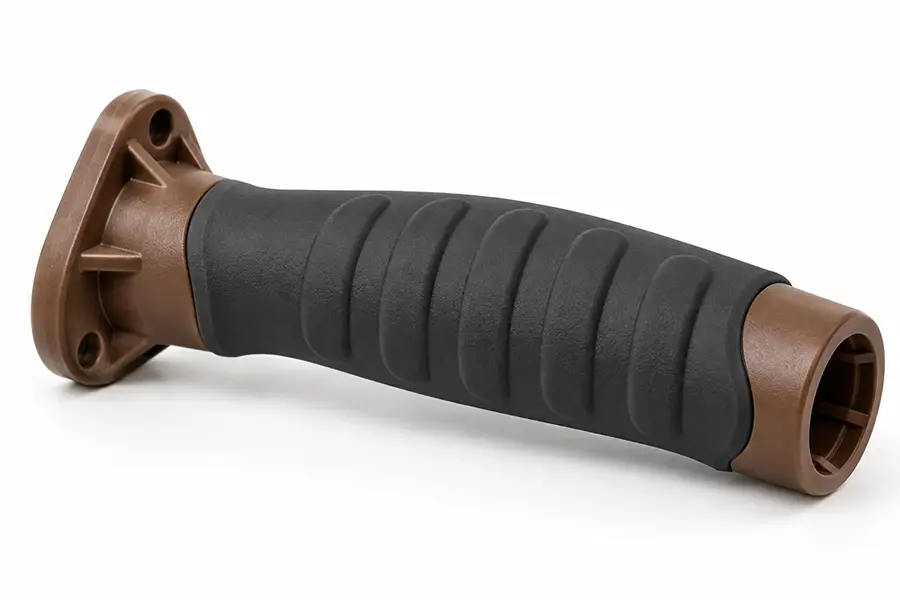 Rigid substrate + elastomer overmold
Elastomer-on-Plastic Overmolding
Add an elastomer layer to a high-temperature plastic substrate for grip, sealing, or cushioning where a compliant surface is required.
Service temperature depends on both materials and their interface, including the elastomer’s heat resistance.
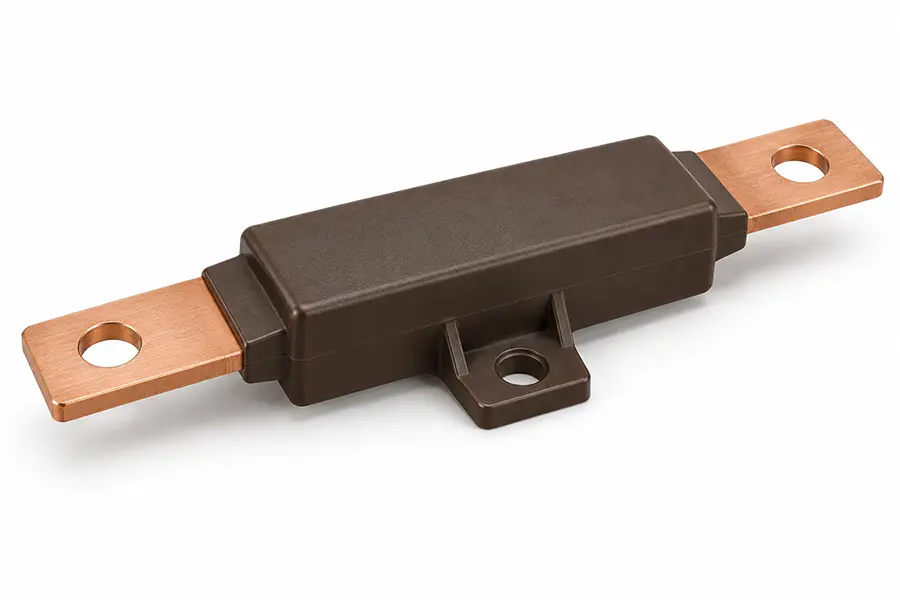 Metal substrate + plastic overmold
Plastic-on-Metal Overmolding
Mold high-temperature plastic around selected areas of a metal component to integrate insulation, protective coverage, or assembly features.
Also an insert molding approach, with metal positioning and thermal expansion considered during development.
Images illustrate overmolding concepts. Specific material combinations require grade-level compatibility review and sample validation.
High-Temperature Materials & Substrate Compatibility
Explore the high-temperature materials featured in our injection molding material selection. For overmolding, we review the exact grade, substrate, and interface together to determine a suitable manufacturing approach.
| Material | Project Requirements | Overmolding Review |
|---|---|---|
| Medical-Grade PEEK | Medical components with specified thermal, chemical, and material documentation requirements. | Review the exact medical grade, processing history, substrate compatibility, and finished-part validation requirements. |
| General-Purpose PEEK | Industrial components requiring performance under combined heat, mechanical load, and chemical exposure. | Evaluate the second-shot processing conditions, substrate deformation, shrinkage, and interface retention. |
| PPSU | Components specified for repeated cleaning or steam sterilization. | Review the complete material combination against sterilization conditions and dimensional requirements. |
| PEI | Electrical and structural parts with specified heat resistance and flammability requirements. | Check grade-specific requirements, molding stresses, substrate support, and overmold coverage. |
| LCP | Compact electrical components with thin sections and precise interface geometry. | Evaluate flow direction, local wall thickness, substrate positioning, and dimensional variation. |
| PVDF | Components exposed to chemicals or fluids within the selected grade’s operating limits. | Review fluid compatibility, surface adhesion, mechanical retention, and sealing requirements. |
| PES / PESU | Components with specified hot-water, cleaning, or sterilization exposure. | Evaluate grade selection, moisture conditioning, molding stresses, and interface performance after exposure. |
| PAI | Specialized components with demanding thermal and mechanical requirements. | Confirm whether the selected grade is injection-processable and whether post-curing is compatible with the assembly. |
| PBI | Specialized high-temperature components requiring a separate process assessment. | Review as a potential preformed substrate or component. Conventional thermoplastic injection overmolding should not be assumed. |
| PTFE | Specialized low-friction or chemically exposed components. | Review the processing route and retention method separately. Conventional thermoplastic injection processing should not be assumed. |
Two Materials. One Working Assembly.
A heat-resistant substrate alone does not define the finished part’s temperature capability. The overmold, interface, and any metal components must also meet the application requirements.
Share Your Material Requirements
Send the substrate grade, preferred overmold material, continuous and peak temperatures, and any fluid or sterilization exposure.
Request a Material ReviewMaterials listed are candidates for project review, not confirmed compatible pairings. Elastomer grades, adhesion, mechanical retention, and finished-part performance are evaluated separately.
Overmolding Solutions for High-Temperature Applications
Integrate protective and functional layers into components exposed to heat. Each solution is reviewed against your operating conditions, substrate, and assembly requirements.
Thermal Protection & Handling
Add localized protective layers to housings and handling surfaces near heat sources, with coverage and geometry developed around the component’s thermal exposure.
- Steam equipment grips
- Heated tool housings
- Thermal guard components
Project review: Surface temperature, exposure duration, and handling requirements.
Electrical Insulation & Protection
Form insulating plastic layers around selected areas of electrical assemblies, with material and coverage evaluated for the combined electrical and thermal demands.
- High-temperature connectors
- Sensor and terminal assemblies
- Electrical feedthrough components
Project review: Insulation requirements, operating temperature, and interface geometry.
Integrated Sealing Features
Combine rigid components with molded sealing features for hot-fluid or steam-related applications, subject to material compatibility and functional validation.
- Hot-fluid connector seals
- Steam equipment interfaces
- Sealed sensor housings
Project review: Fluid exposure, pressure, seal compression, and thermal cycling.
Overmolding Services FAQs
Answers to common questions about material combinations, heat resistance, bonding, and project requirements.
What information do you need for an overmolding quote?
Send your 3D CAD files, available 2D drawings, substrate and overmold material grades, and expected quantities. Identify the areas to be overmolded and any critical dimensions, appearance, bonding, or sealing requirements. For high-temperature applications, include continuous and peak temperatures, exposure duration, and relevant chemicals or fluids.
Can you overmold high-temperature engineering plastics?
We review high-temperature engineering plastics for use as substrates or overmold materials. Feasibility depends on the exact grades, processing temperatures, part geometry, and retention method. Share your proposed materials so we can assess whether the substrate can withstand the second molding operation and whether the interface meets your application requirements.
Will the finished part have the same temperature rating as the substrate?
Not automatically. The finished assembly must be assessed against the limits of the substrate, overmold, and their interface. A high-temperature substrate does not give a lower-temperature outer layer the same heat resistance. Continuous exposure, short temperature peaks, mechanical loads, and thermal cycling should all be included in the validation plan.
How do you determine whether two materials will bond?
We review grade-specific supplier information, substrate condition, processing requirements, and interface geometry. Material family names alone do not confirm adhesion. Where bonding is critical, representative molded samples should be tested against agreed acceptance criteria, including relevant heat, moisture, or chemical exposure.
Does an overmolded part need mechanical interlocks?
Mechanical interlocks are useful when adhesion alone cannot provide the required retention. Through-holes, grooves, undercuts, and wraparound features can help secure the overmold to the substrate. We review these features alongside loading direction, available space, mold access, and thermal expansion.
Can overmolding provide a seal for hot water or steam?
Overmolding can integrate sealing features, but a watertight or steam-resistant assembly requires appropriate materials, interface design, and testing. Specify the fluid, temperature, pressure, exposure cycles, and allowable leakage. Seal performance must be validated on the finished assembly under representative operating conditions.
Can you overmold substrates supplied by us?
We can assess customer-supplied plastic or metal substrates. Provide drawings, material specifications, dimensional tolerances, and details of coatings, mold release agents, or other surface treatments. We also review sample parts, handling requirements, and incoming inspection criteria before confirming the production approach.
What is the difference between overmolding and two-shot molding?
Overmolding describes molding material onto an existing substrate. In a transfer process, the substrate is made separately and loaded into another mold. Two-shot molding forms both materials in a coordinated molding cycle using dedicated equipment and tooling. The appropriate route depends on material compatibility, part geometry, production volume, and tooling investment.
Discuss Your High-Temperature Overmolding Project
Share your part files, material preferences, and operating conditions. We will review the material combination, tooling approach, and production requirements.
What to Send
- 3D CAD files and available 2D drawings
- Substrate and preferred overmold materials
- Operating temperatures and exposure conditions
- Expected quantities and functional requirements
Material selection still open? Send your application requirements for review.